Sunday, July 24, 2016


Current lutes for sale (updated 19/06/2020)


SOLD 6 crs Mandolino (Paris, E0702)


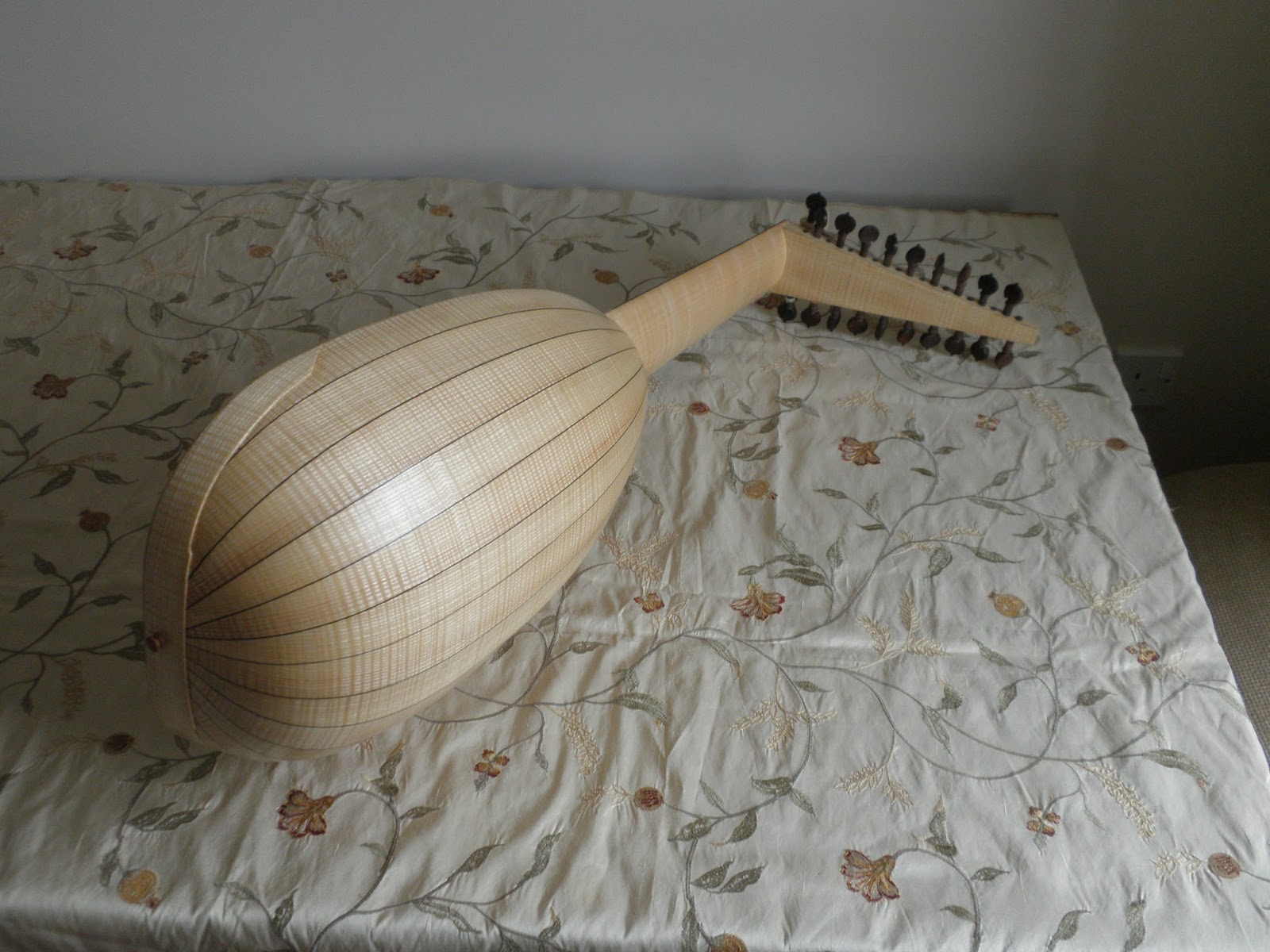
The latest addition is this Mandolino with 6 courses as ordered previously. The original instrument is in the Paris Cite de la Musique No E.0702. The original is mostly in Ebony and Ivory so I made this one out of Yew wood inspired by the Burkholtzer made before with heartwood yew, the rose also has a roped border. The neck is ebonised maple and the peg box ebonised limewood with natural pear wood pegs. The decorative headstock is made of holly and ebony like the original. The intention was to create a venetian lute feel for the mandolino. The case is an oversized case but was bought as left over stock from Kingham and used for this instrument, it can be bought without this case but it does a good job at protecting it and small enough, the instrument can be bought without the case too.


£1565 without the case, (£120 for case shown above)


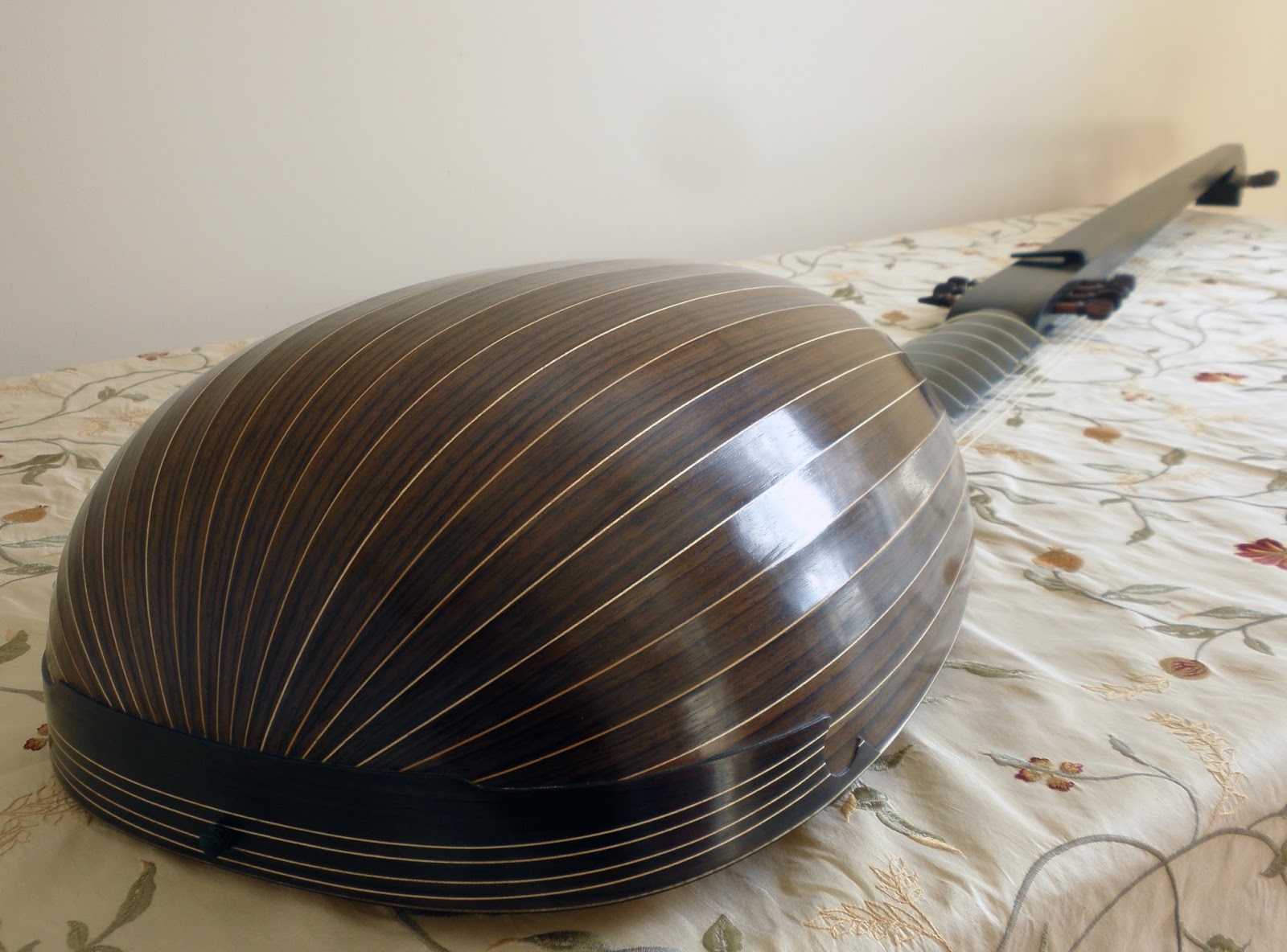
Sold 8 crs Multiribbed Yew Renaissance lute based on Hans Burkholtzer c1596 (KHM NE48)


Originally inspired by the look, shape and sound of the Sixtus Rauwolf lute played by Jacob Lindberg, it was created to give the look/feel of an original instrument. With a multiribbed yew body with old dark and lighter heartwood, one small rib restoration (thus a reduced price), and with a slightly darker/'aged' finish elsewhere, hopefully it's got the ambience of an old/original instrument, dare I say!
It has a Black Walnut neck and pegbox (as recommended by the Mary Burwell lute Ms) and is cheaper than a veneered neck, less ebony too, the fingerboard is black English Bog Oak an eco-alternative to Ebony, the only ebony used is around the soundboard. The pegs and bridge are pearwood with decorative stars carved as seen on another original/ surviving lute by Giovanni Hieber ( Brussels MIM 1561). The original rose design, shown here has a roped border, typical of this type of renaissance lute.

£3073 (£2515 + case £558, a must if shipping overseas) or to order new £2615+ case cost (now £582)


SOLD: 11 crs swan-neck lute (or Double lute) based on MIR 899
Originally by M.Hartung/Harton c1600 converted to a swan neck in c1691 by Johann Zacher/Dacherl Bresslau.


Yew multi-ribbed back, veneered neck with holly lines, stained maple extended neck with stained pearwood pegs, ebony fingerboard and natural pear wood bridge, strung all in gut at f' at a=415Hz, D minor tuning. Alternatively it could be strung like the double lute/luth en tuorbe/Luth a double manche in vieil ton as seen in  Mersenne's Harmonie Universelle (1636),  but in g' at Mersenne's pitch a=375Hz with a different set of strings. New Kingham case wine red exterior/black plush interior. Shallow body and string length of 63.4/90.2cm makes it very comfortable to play Weiss' 11crs music which suits this instrument. Hear it here https://www.youtube.com/watch?v=QKdCKVVtPkk
£ 4260 £3699 inc used case (some exterior scuffing)


Sold: 7 course lute based on Hans Frei (Vienna KHM C34)


7crs student lute for sale, made in 2015, used/hire instrument, ware due to playing/being held means its discounted to the current price. Strung in Kuershner Strings in g' at 440Hz, a warm a responsive tone. Yew heartwood body, maple neck and pegbox, pear wood pegs and bridge, fingerboard in eco-friendly English Bog oak. 

Price: £865 inc Kingham case or £665 with cheaper case


Sold 6 course renaissance lute based on Giovanni Heiber ( MIM 1561)


£ 1593 inc case SOLD but can be ordered at www.jminstruments.com


New 6 course Renaissance lute based on Giovanni Hieber, Venice.
String length 59.7cm strung in NNG and a Gut 6crs. String width at nut 3.8cm, string width at bridge 7.7cm, cherry wood ribs, maple neck and pegbox with pear and box wood heart shaped pegs, fine golden rose, pearwood bridge with stars carved on top, bog oak fingerboard. Case by somerset cases, semi hard case fabric covering.


Sold 5 course Medieval lute c1480


£1683 inc case, sold now but can be ordered from www.jminstruments.com


5 course Medieval lute c.1470, with gut strings in g’ at 440Hz, 52.5cm string length.
English Yew back, pear wood neck, peg box and pegs, parchment rose with pear wood, alpine spruce soundboard with sycamore edging, double fretting. String width at nut 3.3cm, 7.8cm at bridge. Made in 2010, barely played, can be heard on the jamarriage channel on you tube. Repair to one hairline crack rib crack on left hand side, so discounted to £ 1683, case included as seen. 


SOLD 11 course baroque lute based on Hans Frei (KHM C34)


£1200 inc case, sold now but can be ordered via www.jminstruments.com


11course Baroque  student lute for sale at a new price of £1200 inc Kingham case (dark red/mink plush interior). Based on the Hans Frei C34 and made in 2006, rejuvenated for sale. Ribs in Ash, rosewood pegs and fingerboard, pear wood bridge stained black. 11course Baroque  student lute for sale at a new price of £1200 inc Kingham case (dark red/mink plush interior). Based on the Hans Frei C34 and made in 2006, rejuvenated for sale. Ribs in Ash, rosewood pegs and fingerboard, pear wood bridge stained black.


SOLD 7 course lute- guitar based on Laux Maler (MI54)


£ 1276 inc case, sold but can be ordered via www.jminstruments.com


New lute-guitar based on Laux Maler (MI 54) for sale £1276. This instrument is traditional in lute construction but tuned like the guitar with the top string in e’ (a=440Hz) and a string length of 65 cm to make it easier for the guitar player to play the lute without needing to learn tablature. Back in Heartwood English Yew, neck and pegbox in slightly figured maple, bog oak fingerboard, pearwood pegs and bridge. Kinham case red wine exterior/ mink plush interior.


Theorbo based on Pietro Railich c1639 (Brussels MIM 1569)


Currently this instrument exists in three pieces in the museum, to some extent makes seeing inside easier so the barring can be recorded in technical drawing.  This instrument is a 'medium' sized theorbo at 79/162 cm string length and does feel easier to play and has an archlute feel to it especially having a dolphin tail bridge ending, the bridge on the original not being original but probably replaced in 1678 as indicated by the museum providing a second date for the instrument, a repair label usually. The rose had to be reconstructed somewhat, the drawing by the late great Stephen Gottlieb didn't have the rose drawn on (maybe indicating it was taken from another theorbo and inlaid into this one). Below is a picture of the original and the restored design newly made, and the original instrument in it's current 3-piece state:


Monday, January 25, 2016

7 course student Renaissance lute to hire


7 courses covers most of the Renaissance lute repertoire for Dowland with the exception of a few pieces in 8 and 9 courses (according to the complete works by Dowland by Lam). For new students wanting to hire there is a 7crs and 13crs Frei lute via the Lute Society Uk. The lute above was sold so hiring is no longer available for the time being via jminstruments.
Apart from the wide range of student lutes at www.jminstruments.com there are specialist affordable instruments for the experienced lute player who wants to explore a niche area of lute music but not have to spend a fortune just to do so. Below is the student Mandora / Galichon:


To order £1305 + case(from £420)

Listen to it here being played at the Greenwich EMF 2014 


Thursday, April 03, 2014

Early Music Today Lute Competition


K'antu Ensemble (http://www.kantu-ensemble.co.uk ) were the winners of the lute I made for Early Music Today as advertised in the 20th Anniversary Issue (Sept-Nov 2013), thanks to Claudine Nightingale and Adrian Horsewood of Mascherata (http://www.mascherata.co.uk ) for arranging the competition. The instrument marked the 450th anniversary of John Dowland's birth as well as being the first known lute to be made with ribs in  7000 year old Bog Oak from the UK. The wood is intended to replace Ebony as a material for fingerboards and this was the first time it was used for making a back. It's an expensive material but at least customers can choose between Ebony or Bog Oak. The treble is strong and cuts through in an ensemble which seemed to please the ensemble when they collected it. It wasn't too difficult to bend but the rib size was limited due to the size of wood available so it needed to be small.
The 6 course lute, shown above, is one of the many student instruments as listed on the jminstruments website ( http://www.jminstruments.com) usually intended for Children with a string length of 52.5cm, however many have found it surprisingly comfortable. The rest of the instrument has Pear wood and Alpine Spruce for the soundboard the finger board being Bog Oak of course the case by Kingham ( http://kingham.merion.co.uk ). The rose being the standard student lute rose I use as seen on the Hans Frei (Vienna KHM C34).  Please visit the K'antu ensemble website for listing of their performances ( http://www.kantu-ensemble.co.uk/diary.html )

Friday, November 16, 2007

Greenwich Early Music Festival 2007

Another year at the festival but this time I had the new Chitarrone I have been working on in between orders here it is below

The Student Chitarrone has been created for existing lute players who want to get into continuo. I was able to play Kapsbergers famous arpegiatta even though my fingers are not that long. It was then very rewarding to hear Lynda Sayce play Piccinini and Kapsberger fluently on it and loved the sound.

The instrument has been made with 17 ribs of rosewood instead of the 51 on the original which helps cut down construction time and the cost. The fingerboard is made without the usual points and the upperneck is stained rather than veneered. The rose is the original rather than a simplified one and the soundboard has a protective ebony edging. I also know when it's in it's case you can fit on the DLR and tube trains! For those interested in the sound you can hear my attempt at the arpegiatta on the website record for this instrument in the CHITARRONI section. It's a reasonable price for an instrument of this size and work but the idea is to make a quality theorbo that more people can afford thus creating a new desire to own one previously unavailable

It was also nice to see so many people intranced by the instrument alone so I explained to about the origin of the Chitarrone, but to new member's of the lute society (which has increased I am pleased to hear) were more interested in the student g' lute understandably! It was the last one I had and sold at the exhibition so I am currently making more stock, hopefully in time for Christmas!

Thursday, October 12, 2006

Review of Stings Lute CD

When you first listen to the carefully selected pieces the voice seems out of place with the instrument (mostly archlute)but you become used to it. Its probably because I have become used to the sytle of early music performers. However this contrast made me listen to the words of the songs more than on other recordings by early music groups. After listening to the CD a few times I have grown to appreciate what it does, because of the contrast and Sting injecting his style to the singing it helped me imagine the emotion of John Dowland when he wrote the songs. You begin to understand why certain words were used and phrased through Stings style. Even though some songs do have a distracting simulated renaissance choir voice in the background you can appreciate his style. This is aninteresting change to other CD's of Dowlands lute songs because the supporting lute does not distract your attention from the voice.

The lute music is played mostly on Archlutes, which didn't exist in England at the time John Dowland was composing, which is not acurrate but then again this CD is not trying to fit in with the rest. This is what I have grown to like about it because it gives that fresh aproach to lute music which most early music performers won't be able to do since they have not come from a rock or pop background. The use of Archlutes for music that was intended for 7-9 course lute has allowed for some creative editing by Edin Karamazov and Sting. Some peices sound better with the bass played an octave lower. One particular piece 'Have you seen the bright Lily grow' is my favorite from the CD because the sound of the Archlute provides a very calming background, almost remenicent of Enya's style.

The CD is punctuated by the personal letters of John Dowland which Sting reads in a very captivating way, no doubt he brings the benefit of his acting career to entrance us. The words are spoken softly and draw you further into the mind of John Dowland which allow you to appreciate the meaning of the songs. Some of the songs are followed by solo lute pieces which are skilfully played by Edin Karamazov. I can tell that he likes the Baroque lute since the ornaments are different from the renaissance in some pieces. However this does seem to enhance the pieces. On the whole its a CD that is different from any other lute CD I have heard and is a welcome change of performing this period of music. It does not deserve the prejudice I have come across in some reviews but its not surprising it would cause a stirr in the Lute world as well as the Rock world. This is not just some celebrity doing something to be different there has been a creative collaboration from experts in Rock and Baroque. Open your mind a bit and enjoy what happens.

Lutes in stock

  Lutes for sale Last updated 27/03/2026 8crs student lute based on Hans Frei C34 A popular model based on Hans Frei C34, tuned in g' (a...